


Dosulepin Prescribing Across Suffolk Primary Care Practices - Dr Paul Driscoll
- Posted:
- Written by:
-
- Dr Paul Driscoll
- Categories:
This article is part of a series: Bennett Prize in OpenPrescribing Winner Blogs
- Improving Respiratory Prescribing - Dr Huw Miles
- Dosulepin Prescribing Across Suffolk Primary Care Practices - Dr Paul Driscoll
- Improving Methotrexate Safety Nationwide - Ruth Dales
- Tracking the National Transition to Tenecteplase - Daksh Mehta
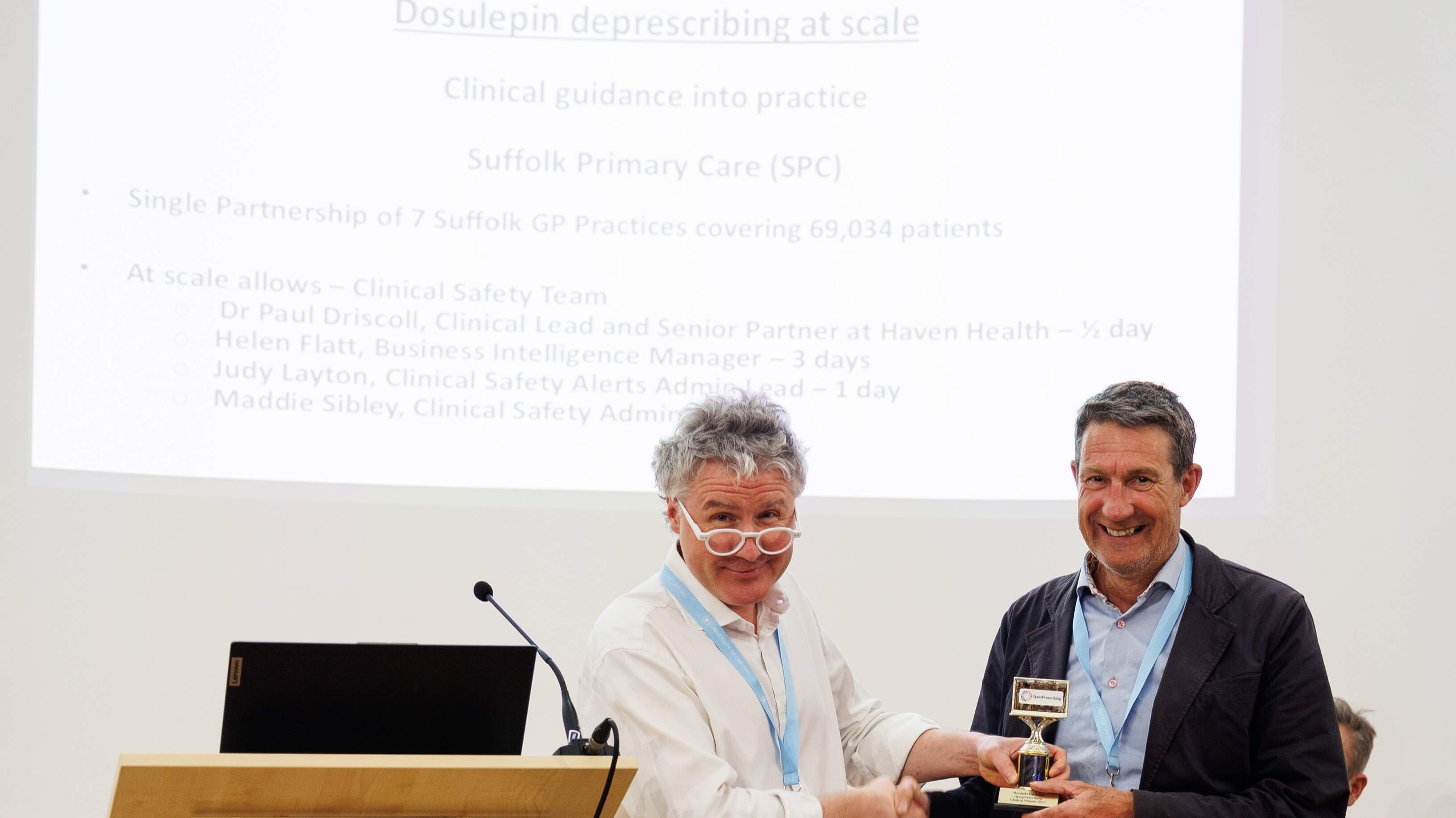
This post below was written by Dr Paul Driscoll, Judy Layton and Helen Flatt, Suffolk Primary Care clinical safety team and joint clinical winners of the Bennett Prize in OpenPrescribing.
Dosulepin prescribing across Suffolk Primary Care practices
By Dr Paul Driscoll, Judy Layton and Helen Flatt
While reviewing monthly updates on OpenPrescribing in the section “items that should not be routinely prescribed in primary care”, I noted we had several patients across our group still taking an antidepressant medication called dosulepin.
Why it matters
NHS England guidance states:
“Dosulepin, formerly known as dothiepin, is a tricyclic antidepressant. NICE guidance on depression in adults has a ‘do not do’ recommendation: do not switch to, or start, dosulepin because evidence supporting its tolerability relative to other antidepressants is outweighed by the increased cardiac risk and toxicity in overdose. Due to the significant safety concerns advised by NICE, the joint clinical working group considered dosulepin suitable for inclusion in this guidance.”
OpenPrescribing data

Using our well-established clinical safety framework, we were able to search for and identify patients from all of SPC’s practices who were still being prescribed dosulepin. All practices agreed to review their patients and discontinue the medication as a result of safety concerns. As many of the patients affected had been taking the medication for some time, a tailored approach for each individual was necessary.
Audit results

As our audit data shows, all patients were taken off dosulepin over a seven-month period and, where appropriate, changed to a different medication with a more acceptable safety profile. Most patients required a slow tapering approach, which is shown by the steady reduction shown over the timeframe.
Each conversation took place with the patient’s regular clinicians at their own practice, which made this intervention incredibly effective. Feedback from the clinicians at our sites was very positive, and showed that our patients understood the need to change and why that change should take place gradually.
The fact that the Clinical Safety Team identified the concern and were able to cascade vital information to our practices so that it could be acted on quickly and effectively shows the benefit of working at scale in primary care. It can be very difficult for busy frontline clinicians to identify issues such as this, so having a separate Clinical Safety Team with the time to do so is a significant benefit to our partnership.
An initial search on the OpenPrescribing website was the catalyst which drove this small but important audit work, underlining the usefulness of that site. As a result, the Clinical Safety Team will now review other medications in the same group to see if further changes are also needed to benefit our patients.