


2026 Bennett Oxford Symposium on Open Code in Science
- Date
- 8–9 December 2026
- Location
- Examination Schools, Oxford
Overview
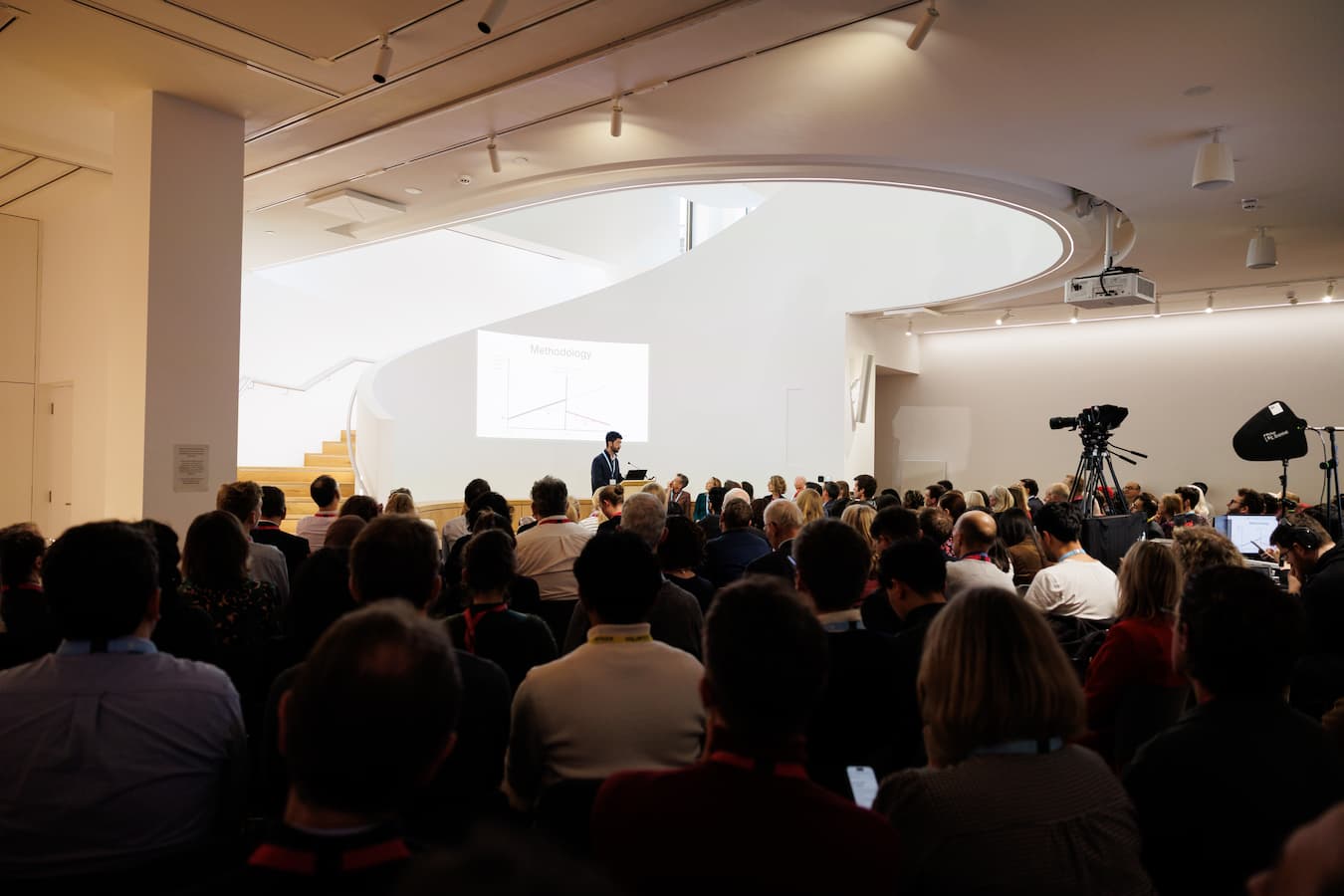
The two-day Bennett Oxford Symposium on Open Code in Science will take place at The Examination Schools at the University of Oxford from 8-9 December 2026.
We look forward to seeing you there!
The event
Here at the Bennett Institute, we have long shared all the code behind both our research projects and our tools and platforms – and we encourage and teach others to do the same!
We think open code makes science better: and we know many agree. It makes research easier to deliver, check, reproduce, and build on. But it’s still far from standard practice.
The 2026 Bennett Oxford Symposium on Open Code in Science will explore, with contributions from across the community:
- What academia can learn from the open-source software movement
- Why people do – and do not – share their code
- The impact of open source code and software in science and beyond, and
- How AI is changing the open-source landscape.
When: 8-9 December 2026
Where: Examination Schools, University of Oxford, 75-81 High Street, Oxford OX1 4BG 1
Book your place using this Eventbrite link 2. Spots are first come, first served, so be sure to register early!
If you’re not joining us for the conference, but would like to come along to Cory Doctorow’s closing keynote on the “Post-American Internet”, please register using this Eventbrite link by 1 November 2026.
Whether you work in research, policy, software development, or elsewhere, the 2026 Bennett Oxford Symposium on Open Code in Science is a chance to connect and learn from those who are both passionate and knowledgeable about open and transparent code and software.
If your circumstances change and you can’t make it, please cancel your registration on Eventbrite 2 or let us know by return email, so we can make room for someone else.
What to expect
With a full day of talks and panels on Day 1 and opportunities for more open and collaborative sessions on Day 2, this year’s symposium will allow attendees to share ideas, skills, tools, and research that emphasise the (many!) benefits of sharing code.
Day 1: keynote lectures, talks, and panel discussions
Sessions will explore topics including:
- The impact of open source code and software in science and beyond
- Understanding why people don’t share their code and how this can be addressed
- Presentations from developers of open source software projects in science, government, and civil society
- How AI will impact the future of open source and transparent code and software
Day 2: informal meetings, group sessions and community building
Day 2 will feature opportunities for group discussions and dedicated time to meet and talk with your fellow attendees as well as Bennett Institute colleagues.
This is the place to come if you would like to learn more about our work, find like-minded colleagues and potential collaborators, share skills and experiences, and think about ways to affect code sharing practice!
Contact
If you have any questions, please contact the team using the email events.bennett@phc.ox.ac.uk!
-
This event will be filmed and photographed, for educational and promotional purposes. The Bennett Institute at the University of Oxford will publish the recording and photographs on the website, social media and elsewhere, free for re-use under open licences. By booking a ticket for this event you are giving your consent to be filmed and/or photographed for these purposes. If you have any questions, or concerns about this please email us at events.bennett@phc.ox.ac.uk. ↩︎
-
Please see more info on our Privacy Notice Page on how we use your data. ↩︎ ↩︎
Venue and details
The 2026 Bennett Oxford Symposium on Open Code in Science will be held at The Examination Schools, University of Oxford, 75-81 High Street, Oxford OX1 4BG.
Getting there
The Examination Schools are in the centre of Oxford, easily reachable on foot or by bike, and only a short distance from the Bennett Institute’s home at the Nuffield Department of Primary Care Health Sciences, Radcliffe Primary Care Building.
- By train: The venue is only a 20-minute walk from the Oxford train station.
- By car: The venue does not support visitor parking. There are excellent Park and Ride options available in Oxford.
Spaces
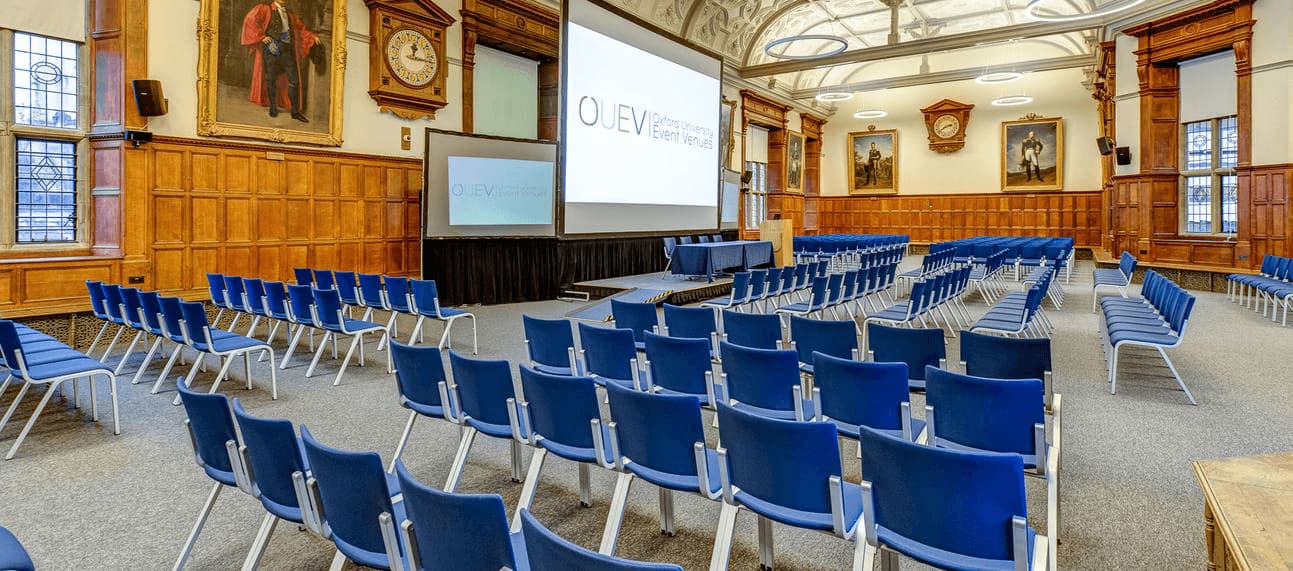
The Examination Schools are a historic venue in the centre of Oxford offering impressive lecture, dining, and break-out spaces. The floorplan is available in this document.
On Day 1
Everything happens in the South Writing Room on the 1st floor.
For sessions with a Q&A we will manage questions via Mentimeter - the link and QR code will be shared on the day.
On Day 2
We will have access to smaller dedicated spaces on the ground floor to host group activities and meetings.
Accommodation
If you’re staying over in Oxford, a choice of University rooms can be booked on UniversityRooms.com.
Facilities
- Lunch and coffee breaks are provided, and there are nearby options on the High Street for any further needs.
- We will have a quiet / reflective space set aside for users who require dedicated space.
- The reception area is at the entrance to the Examination Schools on the High Street.
- Free guest WiFi is available.
Accessibility
An accessible entrance is located at the High Street entrance and a lift is available to all floors. Hearing loops are available based on the request.
Delegates may indicate their accessibility needs through registration.
View the Examination Schools access guide for more information.
Photography / Videography
We will have a professional photographer at the event.
Additionally, all talks on Day 1 will be filmed for sharing on the Bennett Institute website. If you have questions about being filmed / photographed please get in touch. 1
-
This event will be filmed and photographed, for educational and promotional purposes. The Bennett Institute at the University of Oxford will publish the recording and photographs on the website, social media and elsewhere, free for re-use under open licences. By booking a ticket for this event you are giving your consent to be filmed and/or photographed for these purposes. ↩︎
Come and talk!
If you work in open code, or have exciting things to say about it, we’d love to hear from you! We’re interested in talks and posters covering code sharing in any academic domain, as well as areas outside of academia that we can learn from and exchange ideas with.
Are you an economist helping colleagues share analysis code? Working on transparency policies at an ecology journal? Leading the latest innovative open source development of a tool in psychology research? We’re interested in all this and more!
You can submit your ideas for posters, lightning talks (5 min), and standard talks (10 min) for the 2026 Bennett Oxford Symposium on Open Code in Science by 5pm on 21 September 2026.
More details below!
| Format | Description | Submission requirements | |
|---|---|---|---|
| Talk | Lightning talk | 5-minute talk related to any aspect of open code (*see below for preferred focus topics) |
Title 500 word abstract |
| Standard talk | 10-minute talk related to any aspects of open code (*see below for preferred focus topics) |
||
| Poster | Poster on any topic related to open code, including: original research, tools and infrastructure, practical experience, education and training, policy and culture, or community and collaboration. |
Title Note: final poster can be up to A0 size. |
|
Topics of Interest
Examples of your great initiatives in Open Code.
What exciting projects, services, or events are you and your colleagues running to support sharing and using open code?
How to share open source code and software
What can we do to get people to share their code, and get them to share it in ways that are helpful and informative for others?
The power of open source software in science and/or society
Examples of where open source code and software has had an impact within academia and beyond!
Barriers to sharing code and how to overcome them
Why do people choose not to share code and what can be done to overcome these issues and promote broader code sharing practice?
Strategies for making open source the default
How can we design systems in such a way that promote openness and transparency in code and software as the default option?
The impact of AI on open source code and software
What “open” means in the world of AI and the challenges and opportunities this brings.
Bennett Institute Prize for Outstanding Poster Submissions
This year’s Bennett Institute Prize will be awarded for exceptional posters presented at the Symposium. Please designate in your submission form if you would like to be considered for the Bennett Institute Prize. There are no limitations on who can enter.
If you have any questions, please contact events.bennett@phc.ox.ac.uk.